
The History of Monster Truck Shows in the United States

Updated: May 8
From humble farm trucks to six-ton mechanical beasts that soar 60 feet into the air, the story of the large-scale off-road vehicle is a uniquely American tale of "bigger is better." If you’ve ever wondered when did monster trucks start or who decided that putting 66-inch tires on a pickup was a good idea, you’ve come to the right place.
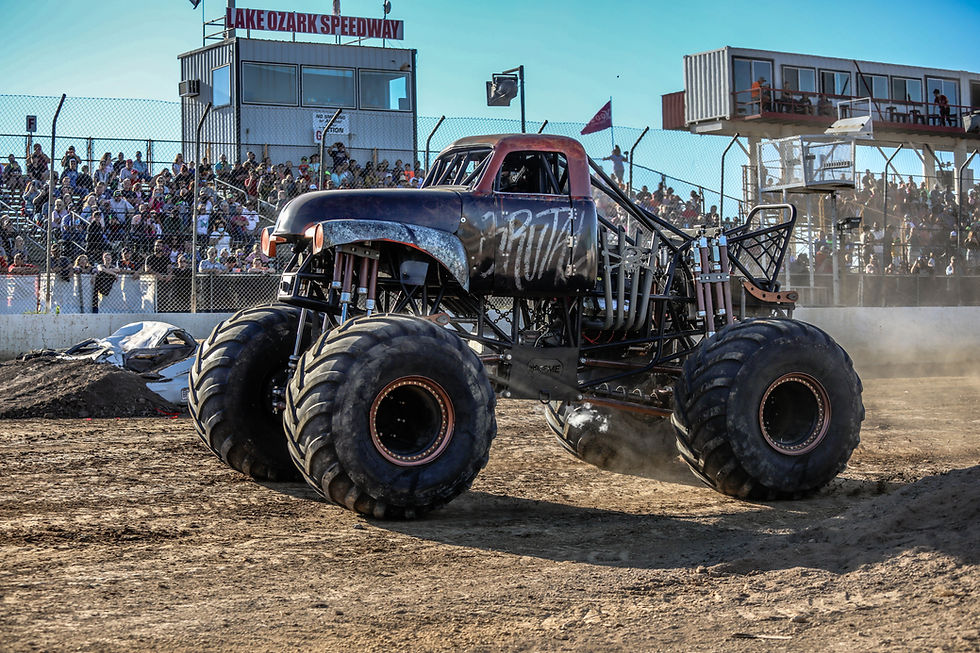
In this blog, we’ll explore the high-octane monster truck history, the legends of the 1980s, and how a car-crushing hobby turned into a global stadium phenomenon.
Where Were Monster Trucks Invented?
To understand the monster truck history, we have to look toward the American Midwest. Where were monster trucks invented? The credit is widely given to the state of Missouri. In the mid-1970s, off-road enthusiasts began modifying their 4x4 pickups to see who could go deeper into the mud or climb the steepest hills.
The most famous of these innovators began beefing up axles and drivetrains on standard 1974 Ford F-250 models, eventually adding rear-wheel steering to handle the massive weight. Little did they know, they were building the foundation for an entire industry of oversized entertainment vehicles.
When Was the First Monster Truck Made?
If you are looking for a specific date for when was the first monster truck made, 1975 is the pivotal year. This was when the first heavily modified 4x4 was given a nickname and began its transformation from a utility vehicle into a specialized machine.
However, the truck didn’t become a "monster" overnight. It was a gradual evolution of suspension and tire size. It wasn't until 1979 that these vehicles started making paid appearances at car shows. The defining moment in monster truck history occurred in 1981, when a builder drove his truck over two junk cars in a cornfield just to see if he could. The footage was filmed for promotional purposes and sparked a nationwide obsession with "car crushing."
When Did Monster Trucks Come Out to the Public?
After the success of that first car crush, the demand for "big trucks" exploded. So, when did monster trucks come out as a mainstream attraction?
In 1982, the first major stadium appearance occurred at the Pontiac Silverdome in Michigan. Around this same time, multiple builders were emerging across the country. These were the oldest monster trucks, and they were the first to challenge one another in exhibition matches. This era marked the transition from "giant work trucks" used for mud bogging to "performance exhibition vehicles" designed specifically for crowds.
The Golden Era: Monster Trucks in the 80s
The 1980s were the formative years for the sport. Monster trucks in the 80s were vastly different from the high-flying machines we see today. These monster trucks from the 80s were incredibly heavy, sometimes weighing up to 20,000 pounds. They featured heavy steel bodies, leaf spring suspensions that provided almost no cushioning, and massive agricultural planetaries.
Key milestones of monster trucks from the 80s include:
The Rise of Rivalries: It became a war between different automotive brands and custom builders.
TV Exposure: Specialized sports networks began broadcasting these events, bringing the carnage into living rooms across America.
The 66-inch Tire Standard: In the mid-80s, the industry standardized the "Terra" tire, originally designed for fertilizer spreaders, as the official size for these giants.
When Did Monster Trucks Start Racing?
Initially, these trucks just drove over cars in a slow, straight line. But as the crowds grew, so did the need for real competition. When did monster trucks start racing?
By the late 1980s, promoters realized that fans wanted to see more than just a crush; they wanted a winner. This led to the formation of sanctioned racing associations in 1987, which established safety rules and standardized racing formats. The trucks began to shed weight, moving toward fiberglass bodies and tubular frames to become faster and more agile.
Understanding the Different Types of Monster Trucks
As the sport evolved, various types of monster trucks emerged to fill different niches in the entertainment world:
Racing Trucks: Built for speed and cornering, these trucks feature lightweight fiberglass shells and sophisticated nitrogen-charged shocks.
Freestyle Trucks: These are designed for massive air, backflips, and technical saves. They have incredible suspension travel to survive landing from 30 feet in the air.
Ride Trucks: These are modified with extra seating in the bed to allow fans to experience the height and power of a monster truck in a safe environment.
Display Trucks: These are primarily used for marketing and "static" displays at dealerships or conventions to draw in crowds.
How Many Monster Trucks Are There?
A common question for new fans is, how many monster trucks are there currently?
While there isn't a definitive global registry, estimates place the number of active monster trucks at between 800 and 1,000 worldwide. Major event organizers operate fleets of nearly 100 trucks to cover various international tours. Beyond the professional circuit, there are hundreds of independent trucks that perform at local fairs and small-town arenas.
The Technological Leap: From Steel to Space-Age
The monster truck history is also a history of engineering. The oldest monster trucks were essentially "Frankenstein" builds—stock truck frames welded together.
Today’s trucks are multimillion-dollar machines. They use:
Methanol-Injected Engines: Producing over 1,500 horsepower.
Nitrogen Shocks: Providing 20-30 inches of travel to absorb the impact of a 10,000-pound truck landing on concrete.
Lexan Floors: Allowing drivers to look between their feet to see where they are placing the tires during technical stunts.
Why We Are Still Obsessed
From the first time those cars were crushed in 1981 to the first backflip performed in 2010, the sport has never stopped pushing the limits of physics. Whether you love the vintage monster trucks in the 80s or the modern carbon-fiber beasts of today, the appeal remains the same: the raw power of man and machine overcoming any obstacle.
FAQs
Q: When was the first monster truck made?
A: The first prototype was created in 1975. However, the first public car crush didn't happen until 1981, which is considered the official birth of the "monster truck" as an entertainment icon.
Q: When did monster trucks start appearing in stadiums?
A: Performance trucks began appearing in major sports stadiums in 1982, shifting from local fairgrounds to massive indoor arenas.
Q: Where were monster trucks invented?
A: The industry began in Missouri, USA, where local 4x4 enthusiasts began experimenting with oversized tires and heavy-duty suspensions for off-road use.
Q: When did monster trucks start racing?
A: Competitive racing began to take hold in the late 1980s, specifically around 1987, when sanctioning bodies were formed to create standardized rules for side-by-side competition.
Q: How many monster trucks are there in the world today?
A: It is estimated that there are approximately 800 to 1,000 active monster trucks globally, ranging from professional circuit competitors to independent local performers.
Q: What are the main types of monster trucks?
A: The primary types of monster trucks include Racing trucks (built for speed), Freestyle trucks (built for stunts), and Ride trucks (built for passenger experiences).
Q: What defined monster trucks from the 80s?
A: Monster trucks from the 80s were defined by heavy steel bodies, massive agricultural tires, and the use of leaf spring suspensions, making them much heavier and slower than modern versions.
Author: Sinjan Gergick

Sinjan leads Engineering and Operations for a major monster truck team, where he’s spent more than a decade turning a small racing outfit into a fully built-out operation with world-class trucks and in-house production. He’s at his best when he’s solving hard problems and turning ideas into products that actually work. Off the clock, he’s with his wife and kids, keeping life grounded and the creativity charged.


Guardando la struttura, il livello di precisione è mantenuto in tutte le sezioni. Le affermazioni comportamentali sono legate a dati concreti di supporto. Il sito web aiuta a inquadrare il problema nel suo dominio appropriato. Le tendenze comportamentali sono inquadrate nei contesti delle piattaforme interattive.
What a ride through history — the jump from mud-bogging hobbyists in Missouri to 1,500-horsepower methanol-injected machines filling NFL stadiums is honestly mind-blowing. The Ford vs. Chevrolet rivalry in those early TNT Monster Truck Challenge days added a whole competitive edge that pulled mainstream audiences in. What often gets overlooked is how much of that original DNA came straight from heavy-duty pickup platforms. Speaking of which, the same truck DNA lives on practically — browsing chevrolet work trucks at Culver City Chevrolet lately showed just how much capability these platforms pack for real-world use. From arena legends to job site haulers, the bloodline runs deep.